
Mount Davidson Cross
Many cultures hold mountains to be sacred – the ancient Greeks had Olympus and the Japanese have Mount Fuji. Christian crosses have been planted atop mountains for centuries. The word Easter comes from Old English Eastre, from Parent Germanic Austron, a goddess of fertility and sunrise, celebrated in the spring. These traditions were combined by social reformer Jacob Riis in 1909 when he suggested the first non-denominational outdoor Easter Sunrise Service in the United States be held on Mount Rubidoux in Riverside, CA. A cross dedicated to Junipero Serra was inititally constructed atop the mountain in 1907 by Frank Miller, founder of the Mission Inn, www.missioninnmuseum.org, and his business partners, including Henry E. Huntington, as part of a park they developed there to promote their housing subdivision at its base. The lots failed to sell, but the idea of an Easter Sunrise event caught the public imagination and the idea quickly spread.
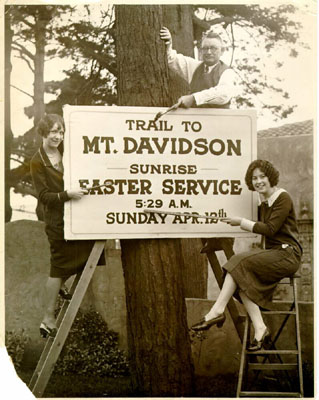
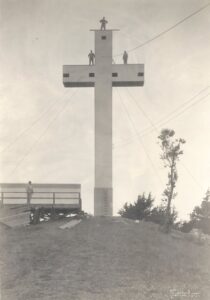
The 103-foot high cross presently sitting atop San Francisco’s highest hill (pictured above) was dedicated in 1934. It was built to last with 750 cubic yards of concrete placed around 30 tons of reinforced steel that is anchored in a concrete block foundation that goes down sixteen feet into the bedrock below. Many may not know that the massive solidity of this structure may due to its being the 5th cross built on Mt. Davidson for the annual Easter sunrise event that started in 1923. Margo Patterson Doss writes, “thousands of people have made the climb in the pre-dawn chill, sometimes in heavy fog or pouring rain, to await the Easter sunrise sermons on the mountain. Impelled by the same conviction that has led pilgrims to walk to Rome, to Jerusalem, to Mecca and up Fujiyama.” Clarence F. Pratt here with residents of Westwood Park and St. Francis Woods posing for a photograph to advertise one of the earliest Easter sunrise events.
The first cross was erected on Mount Davidson in 1923 for a Easter Sunrise Service organized by James Decatur and led by Dean J. Wilmer Gresham of Grace Cathedral. With over 5000 hiking before dawn to attend, the event organizers decided to continue it every year thereafter. Built in a remote area of San Francisco, the 40-foot high cross lasted for two more sunrise services, before it was burned down by vandals in Dec. 1925. A much more elaborate second cross was built in 1926. It was described as being 100-feet high, wired with electrical lamps, and illuminated every night during Easter week. The week following the Easter event in 1926 Madie Brown started a campaign to convince the City to buy a 20 acre remnant of the lush forest planted by Adolph Sutro atop its highest hill from developer A.S. Baldwin to create Mount Davidson Park. Few pictures of the older crosses exist and thanks to John T. Williams, I am able to share, with his permission, newly discovered and copyrighted images of what may be the only ones existing of the 1926 Mt.Davidson Cross being painted on March 3, 1928. John’s father, James Williams, on top of the cross with two other crew members just below.
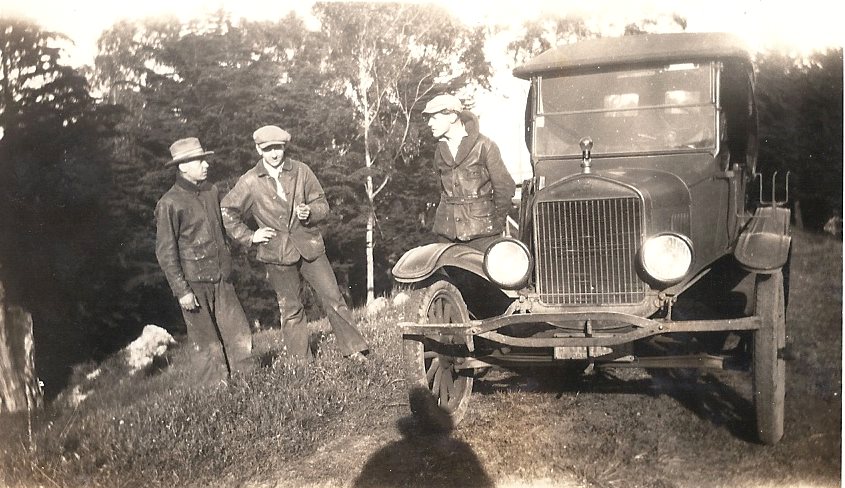
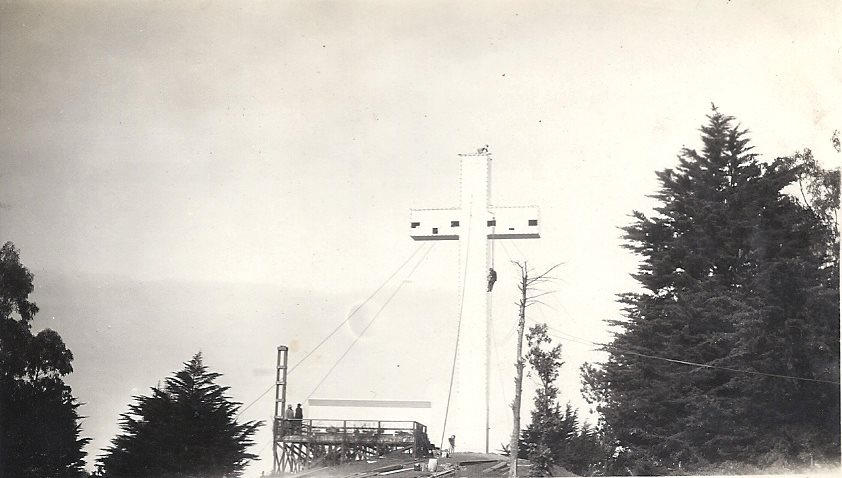
Here is a close-up of the paint crew next to Harry Brown’s Model T pick-up and another of James Williams painting on the right side of the cross from a Bosun’s chair. Note the guy wires and power lines to the left.
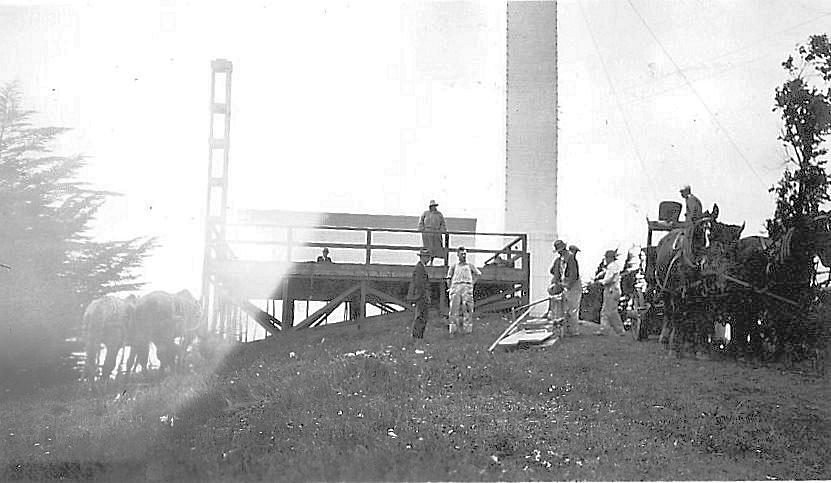
Horses on left were used to pull the building material up the guy wires and to the pull the Bosun’s chair used by the painters. Mrs. Harry Brown on platform. Harry Brown is on ground in front with James Williams in the white coveralls standing next to him. Horses on right used to take building materials up Mt. Davidson.
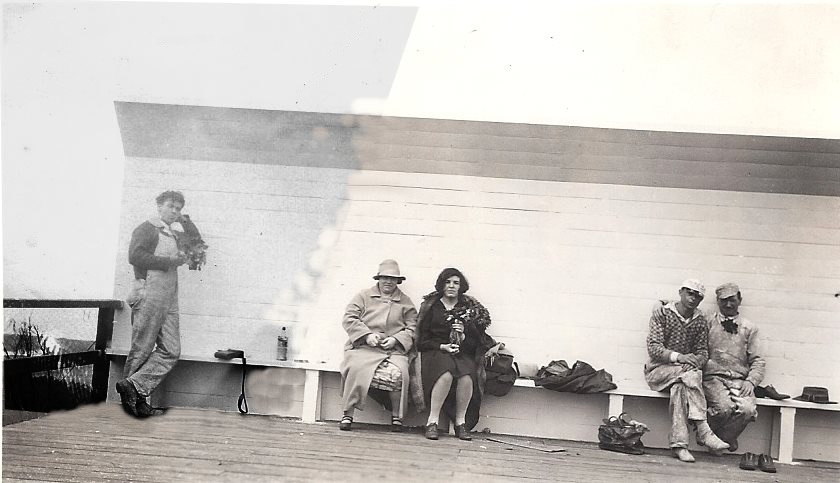
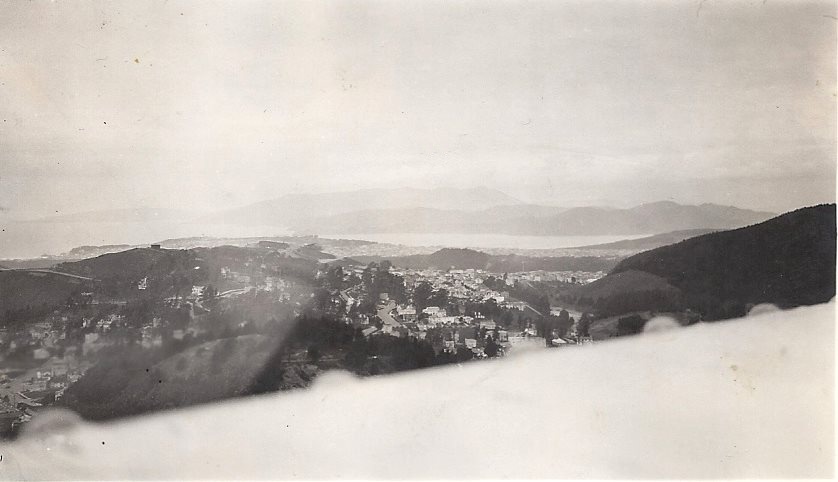
Painters and the family taking a break: James Williams on left with his mother-in-law, Jessie Brown in hat. Two other painters are on right. Above right is a photograph on March 3, 1928 taken by James looking north to the Golden Gate before the bridge was built. Note the light bulbs on the cross in the foreground. Articles about the annual Easter Sunrise Service below.
-
- March 1929
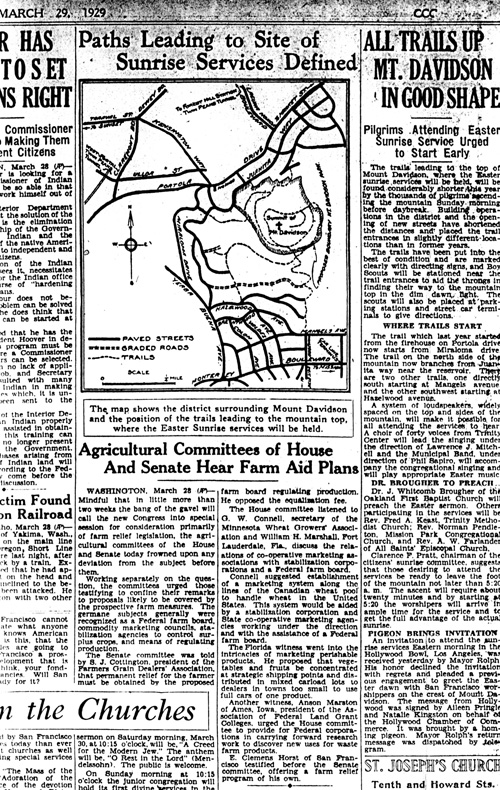
-
- April 1928
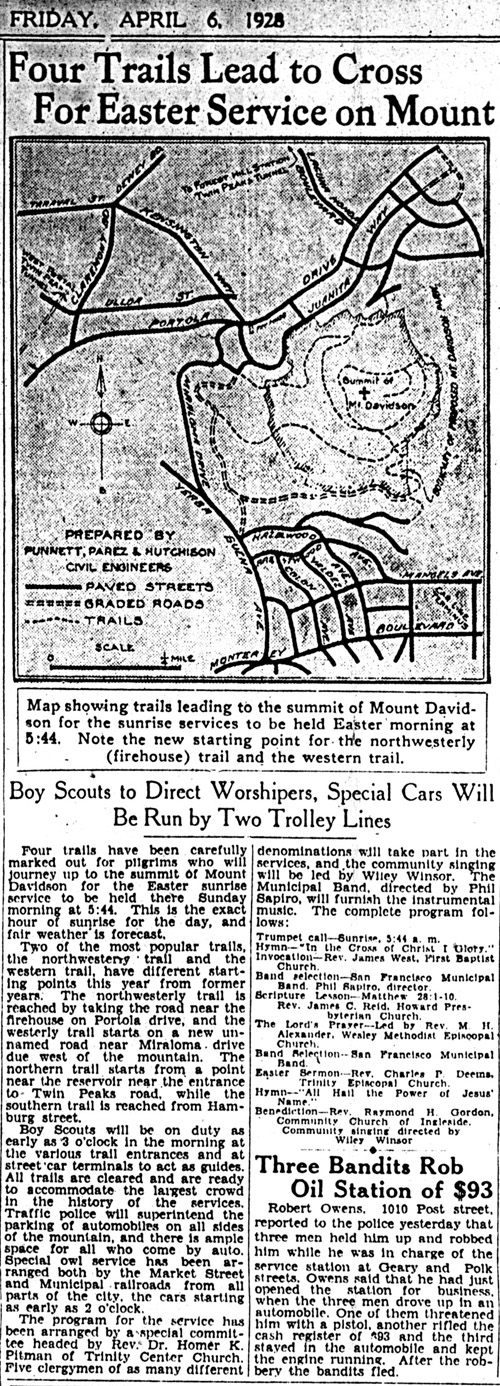
The early crosses were located on the eastern downtown viewpoint atop Mt. Davidson, at the edge of the property purchased by developer A.S. Baldwin from the Adolph Sutro estate. The cross being painted didn’t make it through the winter though, being destroyed by flames in December 1928. By March 1929, the San Francisco Examiner reported of a third cross being constructed: “big cross on Mt. Davidson lighted with wands of electrical lights.”
It was also described as being more permanent, 76-feet high, and decorated with 300 lights. Joseph Leonard, developer of Ingleside Terraces would take the Mount Davidson monument signpost concept to Redwood City in 1929, constructing an eight-two foot high cross above the homes he was building at Emerald Lake. The cross on Mt. Davidson was threatened by a fire in November, 1929, but survived to be shown in these two additional pictures also provided by John Williams of road to and the Easter sunrise event on April 20, 1930:
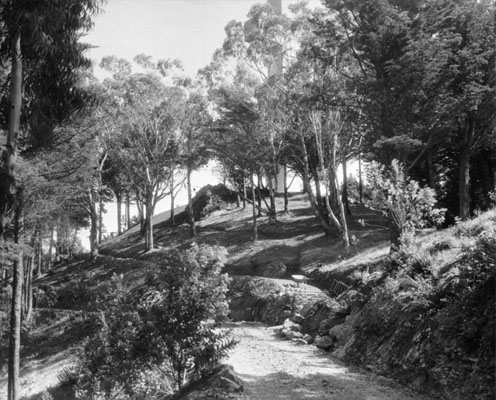
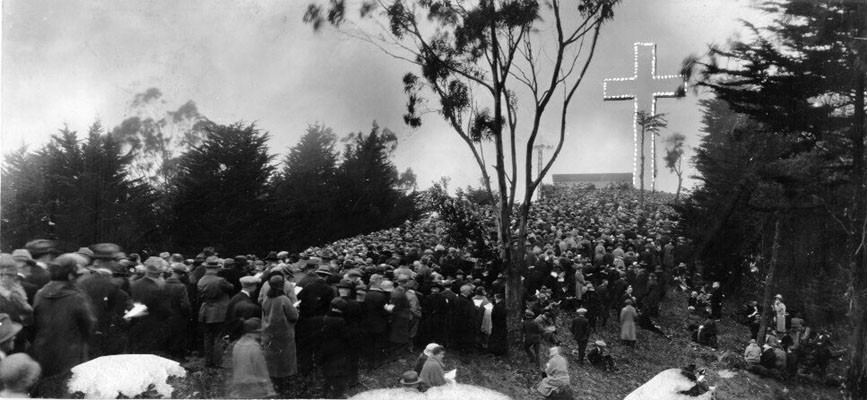
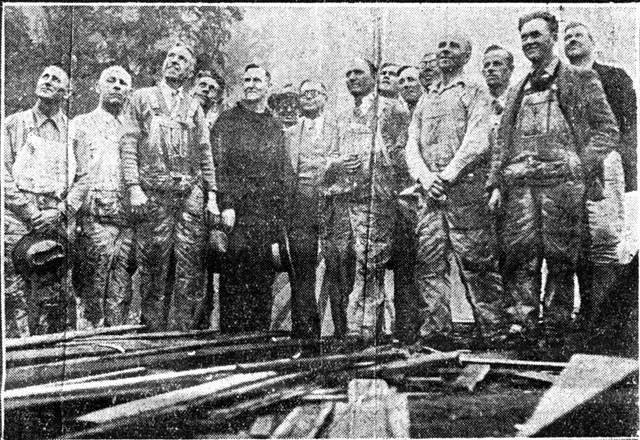
The third cross burned down in May 1931. A fourth cross 46-foot high was then built in March 1932. During the Great Depression, workmen from the carpenter’s union donated labor to construct it. It was reported as wrecked in May 1933. This led to campaign to build a fifth cross – of fireproof concrete for the annual Easter Sunrise event that survives to this day atop Mt. Davidson!.
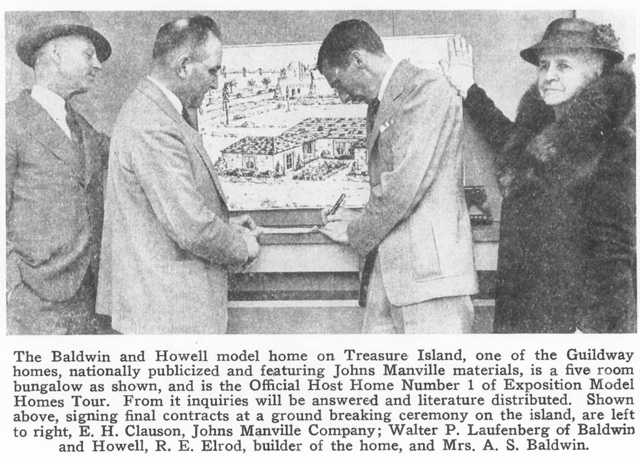
Emma, the wife of the developer, A. S. Baldwin, below right, in front of a model home planned for the Golden Gate Exposition on Treasure Island, donated the six acre crest of Mount Davidson to the City park for the 103-foot high cross, making it visible from most parts of San Francisco by day and up to 75 miles away when illuminated at night. Designed by the architect of San Francisco’s tallest buildings, George Kelham , and Engineer Henry J. Brunnier, the fifth cross to be built on the site and the world’s largest, at the time, was dedicated in 1934 and now on public rather than private property (Courtesy California Association of REALTORS®).
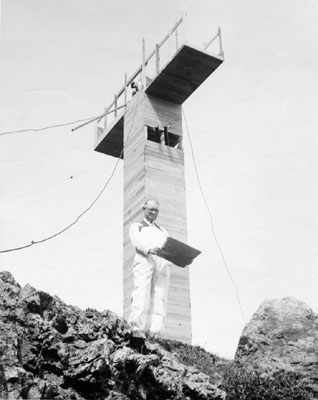
Clarence F. Pratt, Chairman of the Sunrise Easter Service Committee, Director of Pacific Coast Aggregates, Inc., and President of the Outdoor Christmas Tree Association of California, in front of the cross he worked to have built in 1934. Built with $20,000 donated by subscribers, thirty thousand feet of lumber were used to form the 750 cubic yards of concrete around thirty tons of reinforced steel. (Courtesy Glenn Gullmes.)
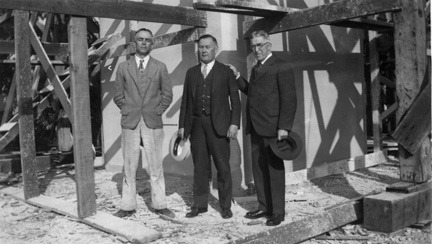
James Decatur with Monson Brothers, construction contractors for the cross. (Courtesy Glenn Gullmes.)
George Kelham‘s design for the Mount Davidson Cross appears a simple one, but the taper of the upright and its rise above the crossarm hints of his stature in the pantheon of Bay Area architects. Architectural historian, Patrick McGrew wrote the landmark nomination for the Sunrise Easter Cross. “It is an object lesson in design purity – the unadorned cross itself is expressed in complete simplicity, as a style that is at once both contemporary, and timeless. The podium upon which it rests bears traces of the Art Deco styling that was being explored by its designer, George Kelham as early as 1928.” His Shell Oil Building is an “art deco tour de force.” The cross was his only monument design and was among his final projects. (Courtesy Bob DeLiso.)
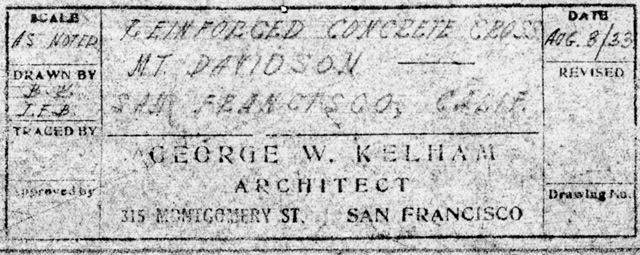

The dimensions of the cross would be as substantial as the skyscrapers and bridges Henry J. Brunnier built. Its cylindrical, concrete block foundation is 18 feet in diameter at the bottom and 14 1/2 feet at the top, going 16 feet down into the bedrock below. Upon the foundation, there is a 62 foot diameter platform with 7 35-foot wide steps. The cross is 10 square feet at the base, and tapers to 9 feet from one tip to the other. (Courtesy Bob DeLiso.)
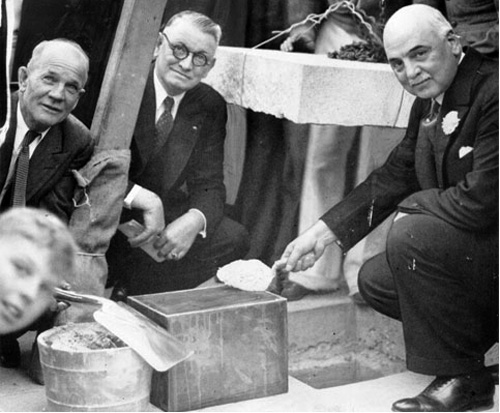
The cross is essentially unaltered from its 1934 appearance at this dedication ceremony when the copper box was lowered into its base. It holds 1848 and 1934 editions of the Bible, stones from the Garden of Gethsemane, water from the River Jordan, 1933 city and telephone directories, and issues of all the leading newspapers of 1934. The box was opened on April 1, 2023 and revealed even more! (Courtesy Glenn Gullmes.)
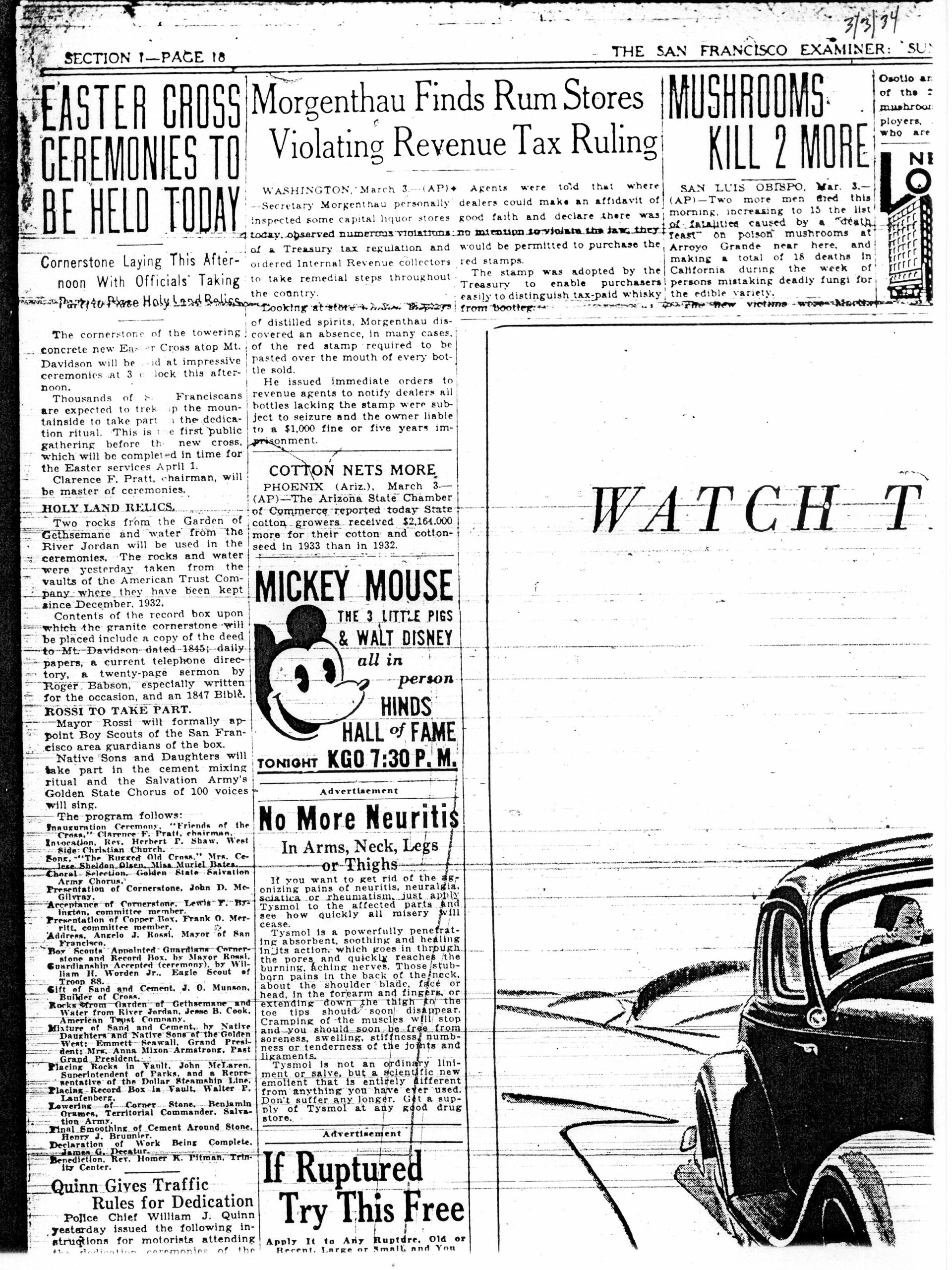
1934 Article detailing the ceremony and time capsule contents.
-
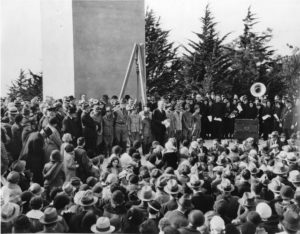
- Cross Dedication Ceremony

-
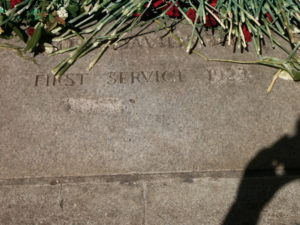
- Granite Cover to Time Capsule
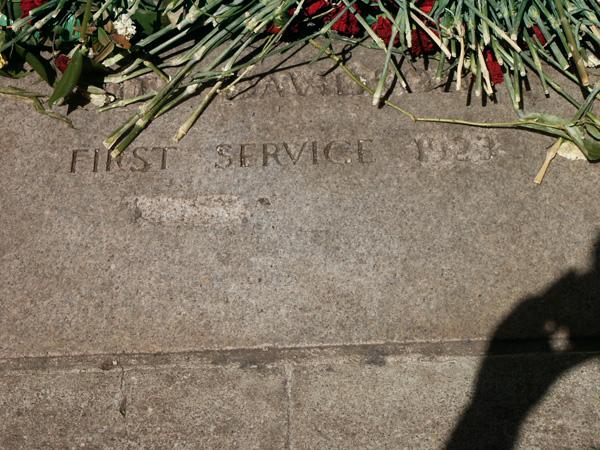
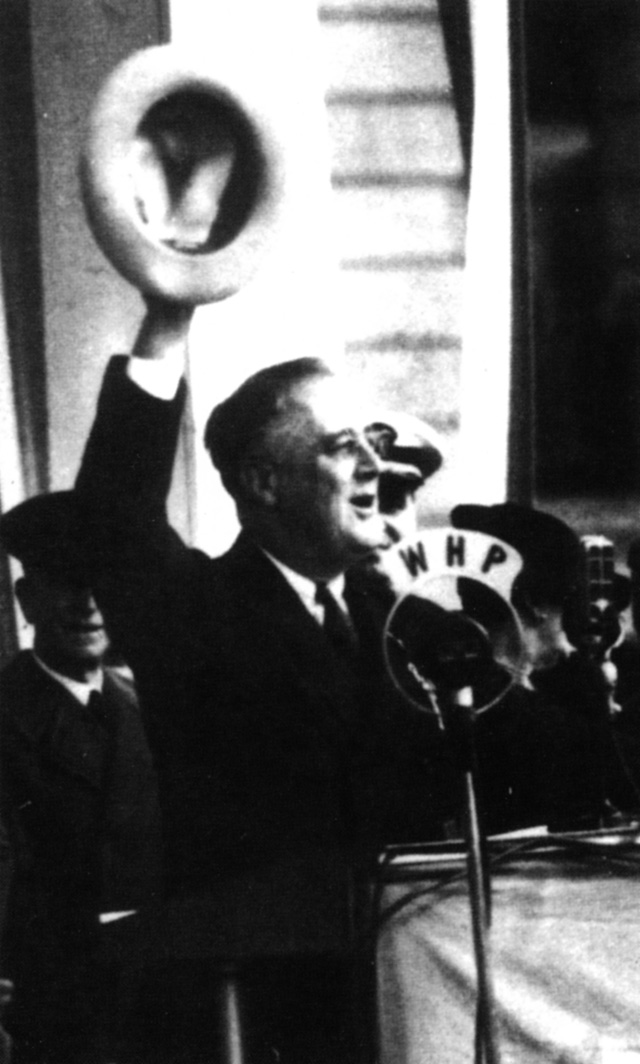
Just a week after Madie Brown wrote her letter asking President Roosevelt to light the cross, the Longshoremen Union voted to shut down the shipping industry along the entire Pacific Seaboard on March 23, 1934 – the day before the Mount Davidson Cross ceremony. The President intervened, appointing a fact finding commission and convincing the union to postpone their walkout, just two days before the cross lighting ceremony.(Author’s Collection.)
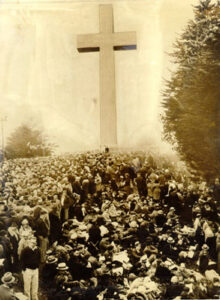
1934 cross lighting by FDR
President Roosevelt pressed a gold telegraph key sending electricity over the wires to turn on the twelve 1,000 watt floodlights (three each on four poles concealed among trees) surrounding the Mount Davidson Cross before a crowd of 50,000.
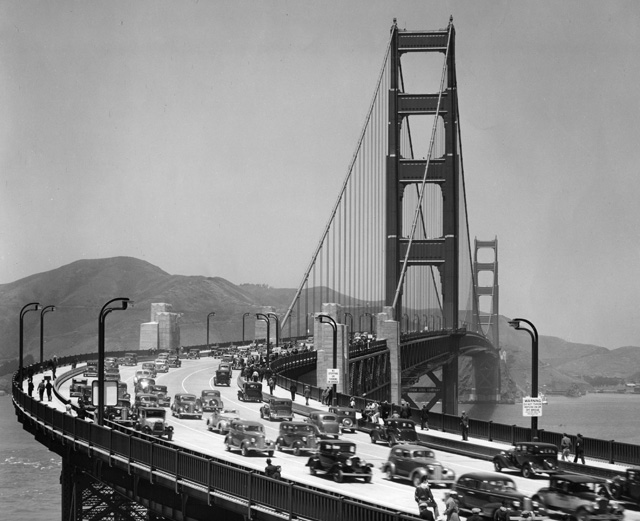
Four years later, President Roosevelt would press a telegraph key from the White House to officially open the Golden Gate Bridge in 1937. (Courtesy Ron Davis.)
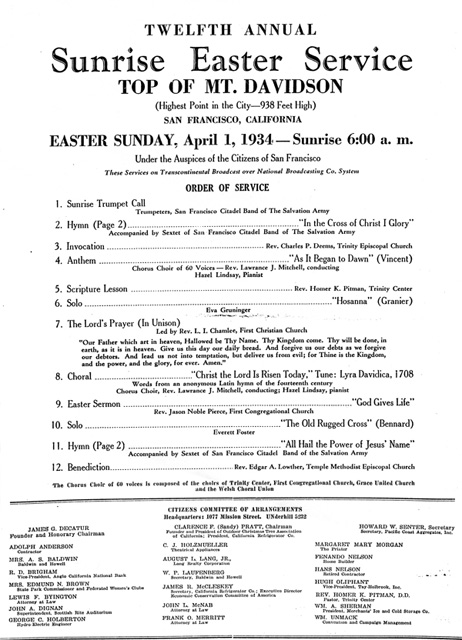
Program for the first sunrise service at the new 103-foot cross on April 1, 1934. The Committee of Arrangements included Hans Nelson, retired builder of Westwood Park; August L. Lang, realtor for Balboa Terrace; Fernando Nelson, builder of Mount Davidson Manor; and Margaret Mary Morgan, first woman elected to the Board of Supervisors, printed the program. Photograph of the Easter Sunrise Service, the following year, 1935, courtesy of John Williams.
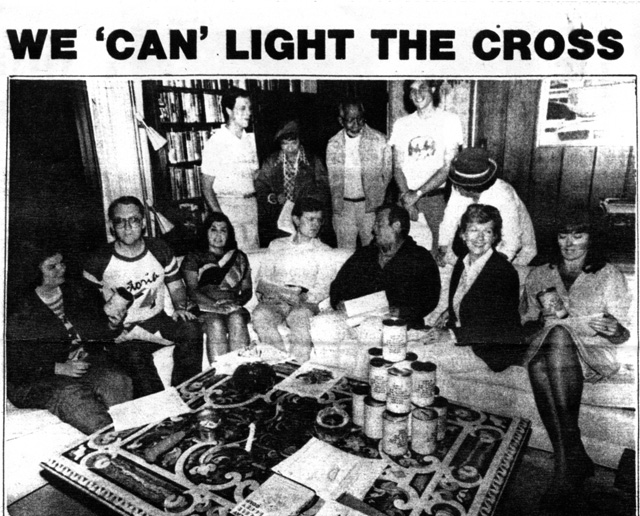
The cross continued to be lit both Easter and Christmas weeks until 1955. In response to a letter from a soldier bound for Korea saying the lit cross was the last sight he had of home, Lakeside Presbyterian Church raised funds for year-round lighting. After the energy crisis in 1976, lighting was reduced back to Easter and Christmas weeks. With the 50th anniversary lighting additions to the Golden Gate and Bay Bridges, the Re-Light Mount Davidson Committee was organized in 1987 to raise funds to resume full-time lighting of the monument neighbors described as “inspirational, comforting, and dramatic.” Chairman of the committee, Terence K. McAteer, son of Senator J. Eugene McAteer, said “the cross is spectacular when lit, really beautiful…it’s very important as a historical symbol.”(Courtesy Jim Ferry.)
The success of the relighting committee’s effort got the attention of some who wanted the cross torn down all together. In response, the City reduced lighting to 2 hours before dawn in 1989. But that did not satisfy the opposition, who filed a lawsuit in 1990 against the City stating that the presence of the cross on city land violated the California Constitution. Conflict over ownership of Mount Davidson makes its way to the California Supreme Court a second time who rules that it is a violation of the separation of church and state for the City of San Francisco to own a religious monument on its highest geographic point. The lights lit by President Roosevelt in 1934 are torn out by the city in an effort to satisfy the plaintiffs.(Courtesy Glenn Gullmes.)
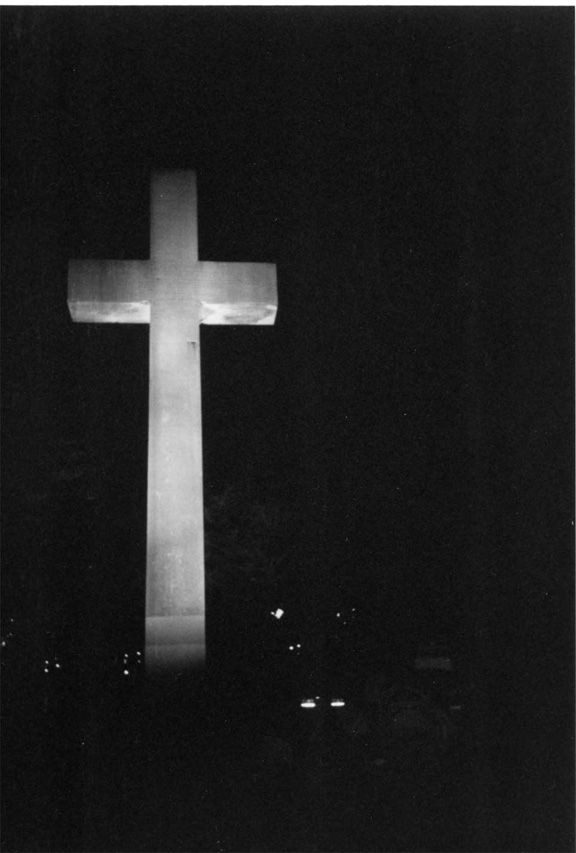
San Francisco’s largest regularly scheduled religious observance has continued every year since 1923 without interruption. Just after Mount Davidson Manor resident, Bill Brown, is diagnosed with an inoperable brain tumor, he takes his family on a pilgrimage to the cross for his last Easter sunrise in 1993, the 70th anniversary of the event. Photographed above in his last months, holding hands with his wife of 50 years, Espie, she will pass away the following year, at the exact same age of seventy-two. (Courtesy Margie Brown Whitnah.)
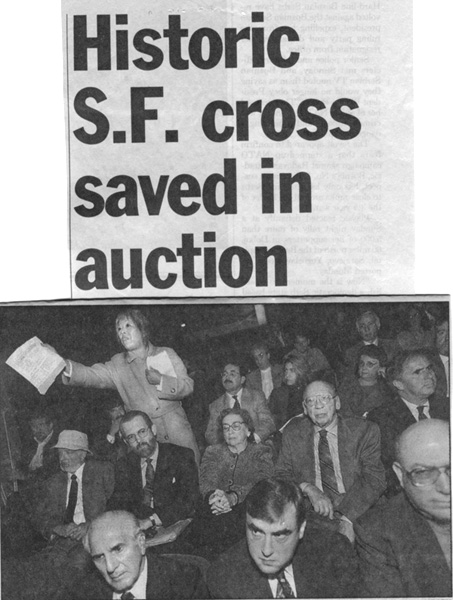
Neighbors organize the Friends of Mount Davidson Conservancy in 1996 to protect Madie Brown’s legacy. After the city decides to auction the land under the cross, the Conservancy negotiates a 5.62 acre reduction in the amount of park land to be sold. The Conservancy also gets a conservation easement added to the auctioned property description to ensure that nothing can ever be built on the property – even antennas, according to City Attorney Louise Renne. (A telecom company proposed saving the monument, by tearing it down and rebuilding it as an antenna!)
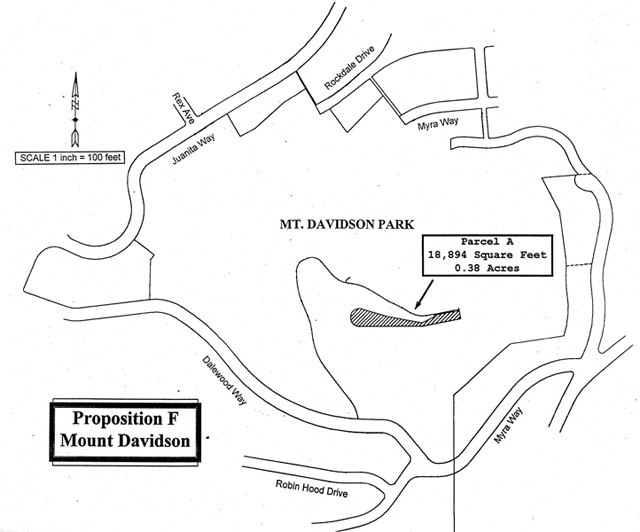
November 1997 Voter Pamphlet Map for “Proposition F would approve sale of 0.38 acres of Mount Davidson Park, including the land upon which the cross is located, to the Council of Armenian Organizations of Northern California for $26,000. The terms of the sale require that the land remain open space for public access and prohibit the buyer from making commercial, industrial or residential use of the land.”
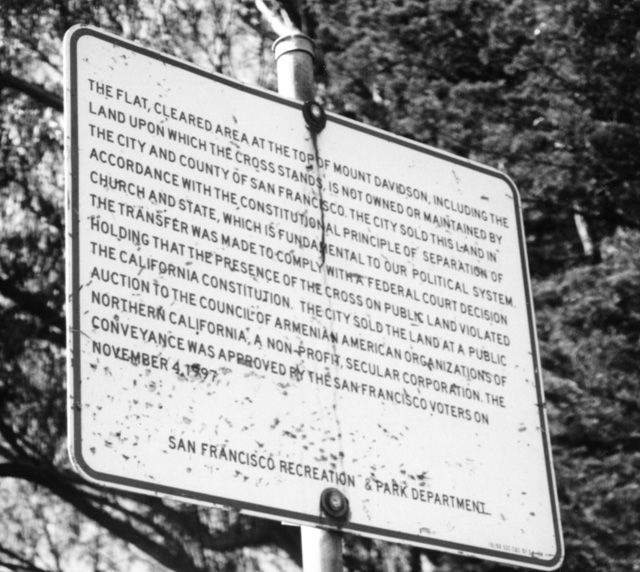
Sixty-eight percent of voters approved the sale of the summit of Mount Davidson Park, originally part of the property donated to the city by Mrs. A.S. Baldwin. Per court order, signs are now posted at the park entrances and at the perimeter of the now privately owned summit around the cross to reaffirm its separation from the public park land.
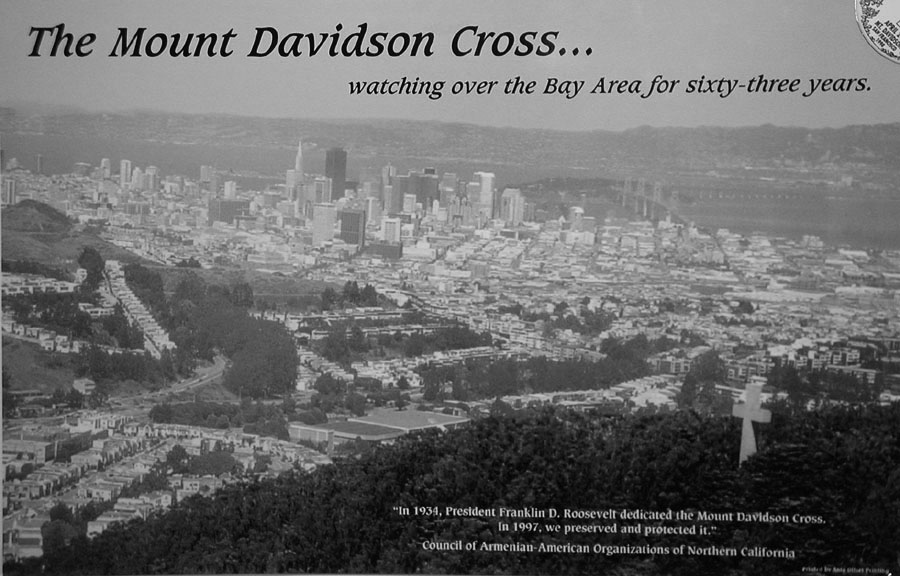
Postcard view of the Mount Davidson Cross from the highest point in San Francisco celebrating its preservation in 1997 by the Council of Armenian Organizations of Northern California.
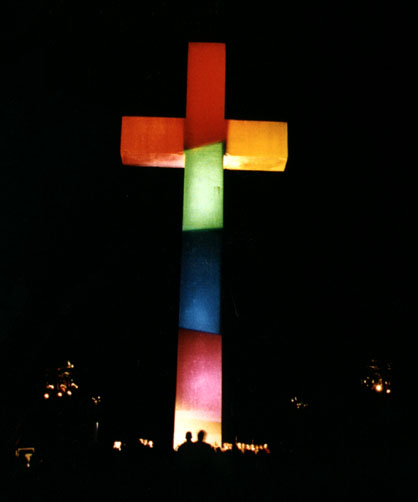
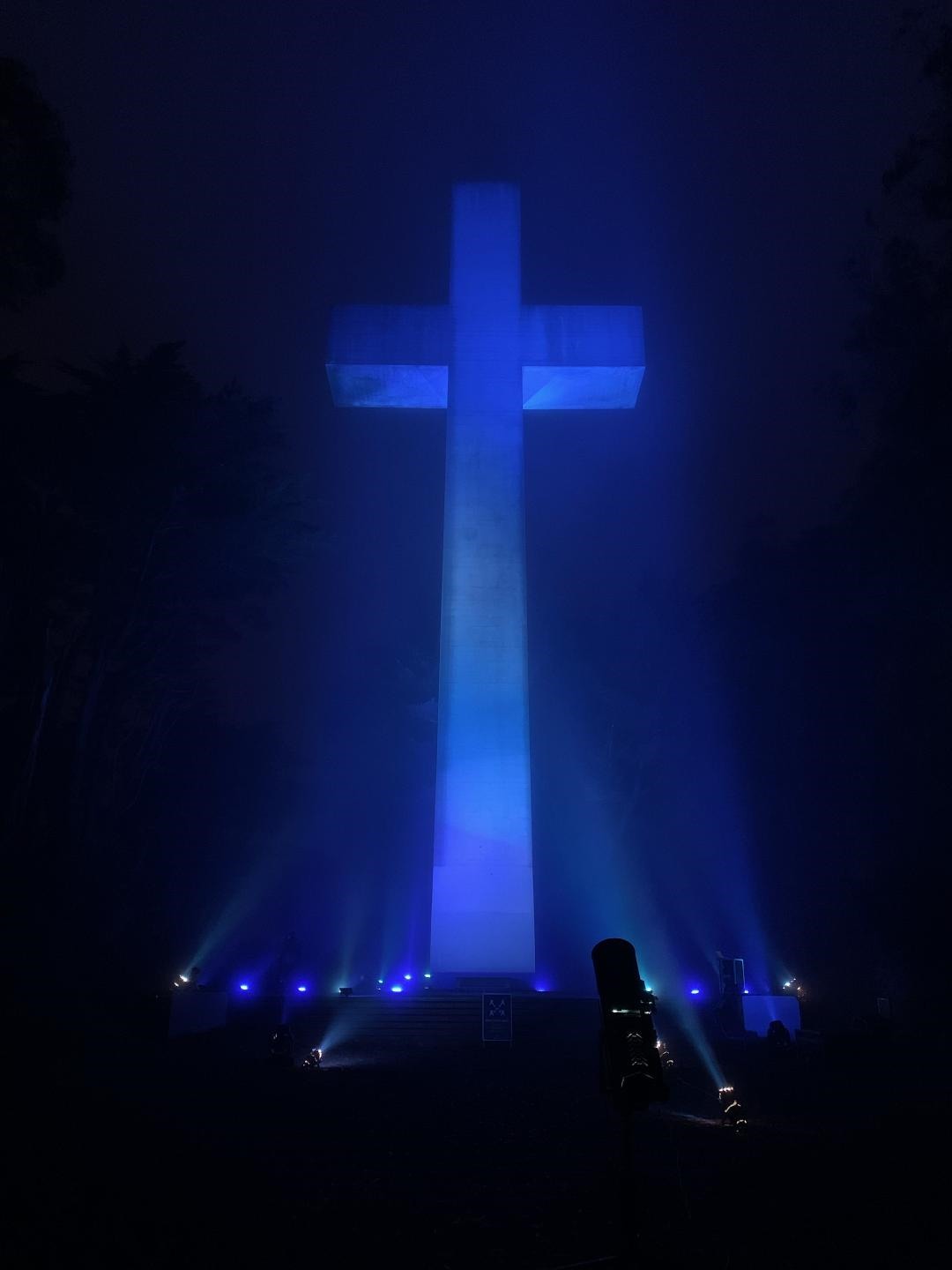
The court order restricts lighting of the cross to two days a year. Members of the Metropolitan Community Church celebrate Easter eve with rainbow colored lighting in 1998. The cross is lit blue during the 2020 pandemic.
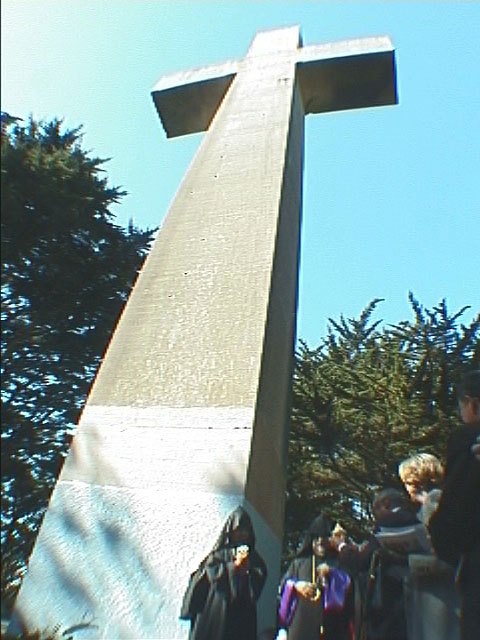
Purchased by the Council as a memorial to the Armenian Genocide, a plaque is installed at the base of the Mount Davidson Cross on the Commemoration Day, April 24, 1998, at the Mount Davidson Cross. The world leader of the Armenian Church comes to the site in 2000 to celebrate the church’s 1700th anniversary. (Courtesy Glenn Gullmes.)
One hundred years after the first sunrise service, on April 1, 2o23, the copper box time capsule at the base of the cross was unearthed and replaced with a new one.
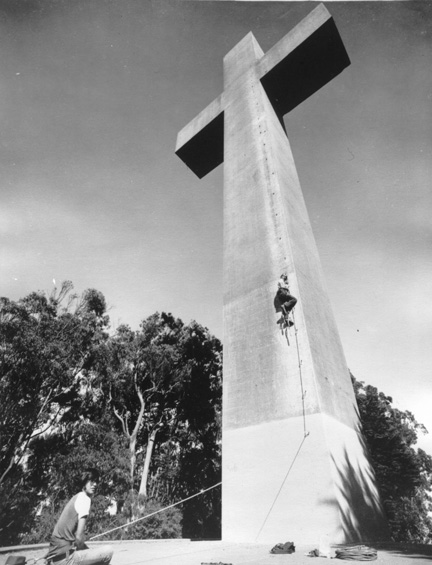
When James Decatur first hiked up Mt. Davidson in 1923, it was covered with a forest of trees planted by Adolph Sutro in what was considered a remote and sparsely populated area of San Francisco. The developer who owned the hill and built the trail to the top was eager to sell housing lots on its slopes may have encouraged the creation and continuance of the Easter sunrise service to lure potential home buyers to what many called “The Outsidelands.” While only 5000 attended the first event, the attendance grew to 30,000 during the Great Depression. Except at this event, very few people visited the area which subjected the temporary crosses to vandalism and extreme weather. With the dedication of the permanent concrete cross in 1934 attended by over 50,000, the concrete fireproof cross would not only survive vandalism and strong winds, but a court case to remove it. San Franciscan journalist and open space activist, Margot Patterson Doss, wrote, “Bridges, towers, pyramids, radar fixtures, microwave relay stations, Nike missile sites and other recent soaring monuments notwithstanding, San Francisco’s most enduring landmark for the last 200 years has been a cross on a mountaintop. Although it hasn’t always been the same cross, or the same mountaintop, the landmark has always stood near the sea.” Clandestine Cross Climbers in the 1970s. (Courtesy Miraloma Community Church.)
Video of the history of the park: Mount Davidson: San Francisco’s Hidden Treasure. KQED Radio Bay Curious Podcast: Why There Is a Cross on San Francisco’s Highest Peak.